
Dividend tax, salary and Corporation Tax stay put. Here’s what the Autumn Budget 2026 changes for limited company owners, from BADR to savings income.

If you run your own business, the Autumn Budget on 28 October 2026 doesn’t change much for you day to day. The main rates of Income Tax, National Insurance, dividend tax and Corporation Tax all stay the same for 2027/28.
There are five changes you’ll notice though:
Savings and rental income will be taxed at higher rates from April 2027
Selling your business will cost more in tax from April 2027 if your lifetime gains are over £500,000
Tax relief on equipment changes from January and April 2027
Paying HMRC moves to Direct Debit and in-year payments from April 2029
Taking money out of a limited company through less common routes will be taxed differently from April 2028
The figures below come from HMRC’s Budget 2026 rates and allowances and the Budget documents published on 28 October.
Will the Budget change how you pay yourself?
No. However you take money from your business, it works the same way in 2027/28.
For everyone:
Income Tax stays at 20%, 40% and 45% (Scotland sets its own rates)
Personal allowance stays at £12,570
If you’re self-employed or in a partnership:
National Insurance stays at 6% on profits between £12,570 and £50,270
It stays at 2% on profits above £50,270
If you run a limited company:
Dividend tax stays at 10.75%, 35.75% and 39.35%
The dividend allowance stays at £500
Corporation Tax stays at 19% up to £50,000 and 25% above £250,000, with marginal relief in between, through to March 2029
If you employ people:
Employer National Insurance stays at 15% on pay above £5,000 a year
Employment Allowance stays at £10,500
If you’ve already set your pay for this year, you can leave it as it is. Knowing the rates are staying put also makes it easier to plan the next couple of years.
What’s happening to tax on savings and rental income?
Both go up by four percentage points from 6 April 2027: two announced last year and two more in this Budget.
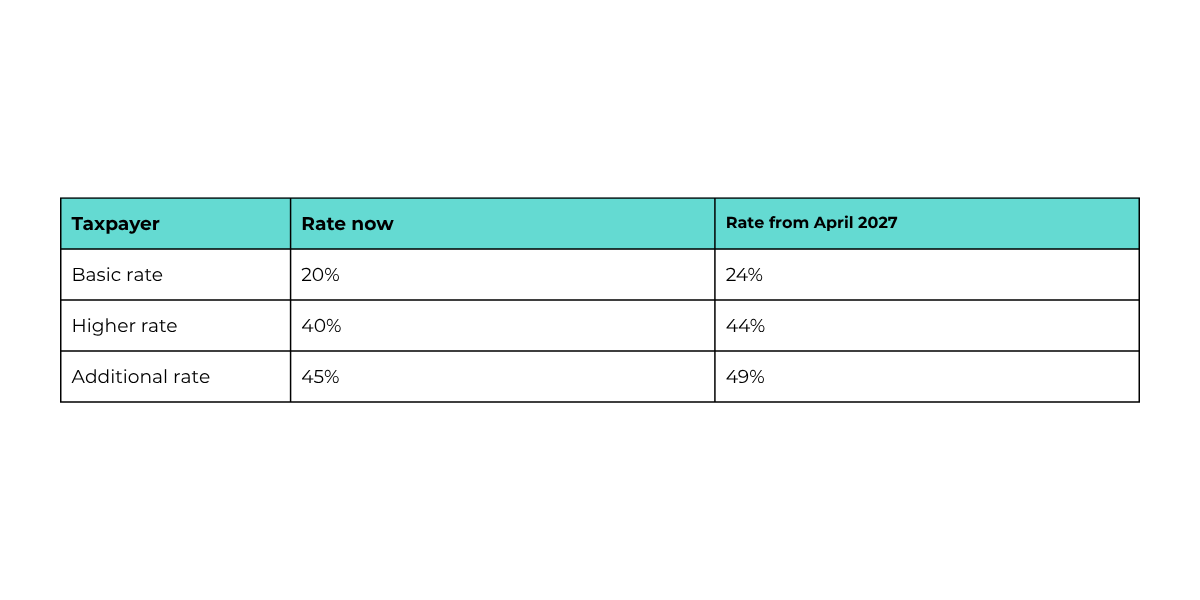
Savings: these rates apply across the UK
Rental income: these rates apply in England, Wales and Northern Ireland
Property held in a limited company: taxed through Corporation Tax, so these rates don’t apply
Example: a higher rate taxpayer with £10,000 of rental profit, all in the higher rate band, pays £4,000 now and £4,400 from April 2027
ISA allowance: stays at £20,000
If you leave spare profits in a personal savings account, now’s a good time to review where that money sits.
What changes if you plan to sell your business?
Business Asset Disposal Relief (BADR) is halving from 6 April 2027.
Lifetime limit: drops from £1 million to £500,000
BADR rate: stays at 18%
Gains above the limit: taxed at the normal rates, which for most business owners selling up means 24%
Example: for a higher rate taxpayer, tax on a £1 million qualifying gain goes from £180,000 to £210,000
Most BADR can save you: £30,000
Who’s affected: the government estimates three in four people who claim BADR won’t be
A new Founders’ Relief starts on the same date:
10% rate on up to £10 million of lifetime gains
Aimed at founders and early investors in high-growth, innovative companies
Proposed tests cover owning a significant stake from the start, holding shares for at least five years, and the company’s size and growth
Detail still out for consultation
We always look at a sale as a bonus, on top of any plan you have to step away from your business. Building your number through steady pension contributions gives you a plan grounded in what you can control. If a sale is already planned for 2027, talk the timing through with us before 5 April.
Is there anything new for buying equipment?
There are two changes. Most businesses won’t notice the first one.
First-year allowance rises from 40% to 50% for spending from 1 January 2027
Writing-down allowance falls from 14% to 12% from 1 April 2027 for companies, and 6 April 2027 for sole traders and partnerships
What it means for you:
The £1 million Annual Investment Allowance still gives you full relief on new and second-hand kit in the year you buy it
Limited companies can also claim 100% on most new equipment through full expensing
The lower writing-down rate means slower relief on some company cars and on spending from earlier years that’s still being written down
Our guide to capital allowances explains how each one works.
How will paying HMRC change?
Both changes start in April 2029, so you’ve got time to get ready.
VAT and PAYE will need to be paid by Direct Debit, with some exceptions
Self Assessment payments on account will be replaced by smaller, automated payments through the year, with the option to pay through PAYE if you’re eligible
One piece of good news: the government has dropped plans to make companies report more detail on payments to directors and shareholders, for now.
Paying tax through the year will affect your cash flow. Your forecast needs to show those payments month by month so they don’t catch you out.
Are the rules on taking money out of your company changing?
Yes, for a few less common ways of taking money out.
From: April 2028
What’s targeted: profits taken out as capital, for example through a new holding company and a share buyback
How they’ll be taxed: as income
What stays the same: ordinary dividends and dividend tax rates
Draft legislation: due in 2027
If you’re planning a restructure, a buyback or passing shares to family, talk to us early.
What should you do next?
Most people won’t need to change anything this tax year. If you have savings or property in your own name, a sale on the horizon, or big equipment purchases planned, book a call and we’ll run your numbers against the new rules.
Frequently asked questions
Do these changes apply straight away?
Most start in 2027 or later, and they still need to pass through Parliament in the Finance Bill. Details can change before then, and we’ll update this page if they do.
Is anything changing for Making Tax Digital?
If your combined self-employed and rental income is over £30,000 before expenses, you’ll join Making Tax Digital for Income Tax from April 2027. The Budget confirmed new joiners won’t get penalty points for late quarterly updates in 2027/28. If you joined in April 2026, penalty points apply from April 2027.
Has anything changed for company pension contributions?
The annual allowance stays at £60,000 for 2027/28. The £2,000 cap on National Insurance savings for salary sacrifice, announced last year, still starts on 6 April 2029.
Are pensions still coming into inheritance tax?
Yes. This is already law. From 6 April 2027, most unused pension funds count towards your estate for inheritance tax. This Budget made some technical changes to how it works.
Did the VAT registration threshold change?
No changes were announced, so it stays at £90,000.